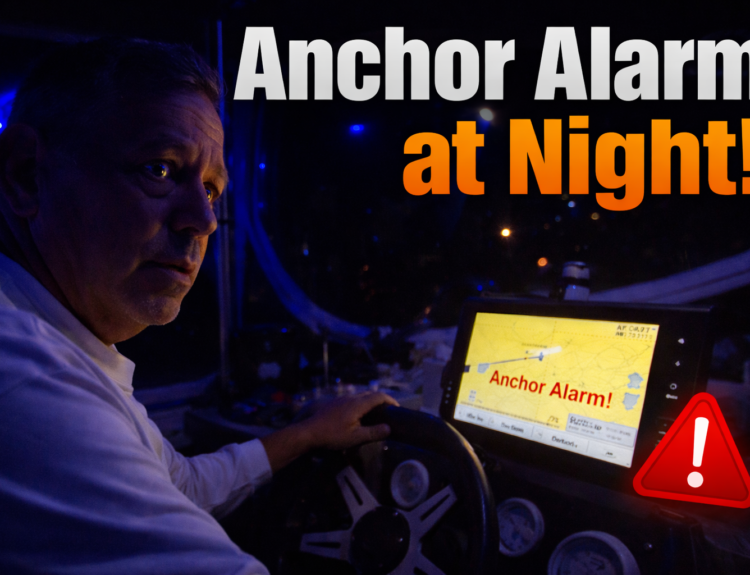
Anchoring during a storm can be one of the most stressful situations for boaters — especially when it happens at night. But in most cases, anchor dragging doesn’t start when the wind picks up. It starts much earlier in the day with decisions about anchor placement, scope, and preparation.
Why Anchors Really Drag
Most anchors don’t fail because the anchor itself is bad. They fail because wind creates waves, and waves repeatedly lift and drop the boat. That vertical motion works anchors loose, especially if there isn’t enough scope or shock absorption.
Ground Tackle Matters
Your anchor system — known as ground tackle — includes the anchor, chain, rope, shackles, and snubbers. Each part plays a role. Weak links, insufficient chain, or poor connections can all contribute to anchor failure during storms.
Proper Scope Is Critical
A general rule is a 7:1 scope ratio. That means for every 10 feet of water depth, you should have at least 70 feet of chain or rode deployed. More scope reduces shock loads and keeps the anchor pulling horizontally instead of upward.
Choose the Right Anchorage
Good anchoring starts with location. Protected coves on the leeward side of land reduce wind and wave action. Always allow room for 360-degree swing in case the wind shifts overnight.
Test Before You Need It
One of the most important lessons for Great Loop cruisers is to test your anchoring system on a windy day before starting the journey. Finding weaknesses early is far easier than dealing with them at night in unfamiliar waters.
👉 Click Here to watch the video, and stay tuned for the follow-up episode: Dragging Anchor at Night — What to Do When It Happens.